


Atlantis, Plato, and Cycles of Time
Written history gives us a record, more or less, of the last 6000 years of human thought. We can see into the mind of an ancient resident of Egypt, Babylon or India from the writings he has left us. Beyond that 6000 year barrier, there are no written texts, no inscribed stones. We have mute tools and artworks and we have legends.
In the regions near the Atlantic Ocean the legend of a great flood is so common that a historical basis is very likely. And the civilization that was destroyed by that flood had a name that even today has great power: Atlantis.
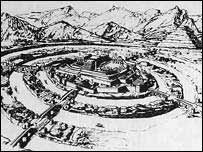
Our knowledge of Atlantis is based on many minor bits of evidence - and one document that may rise to the level of history. That is a short section in a work by Plato called Critias. An ancestor of Plato named Solon traveled to Egypt about 600 BC and lived for a time in Sais (Zau), then the capital of Egypt and an ancient center of learning on the Nile Delta. Here he befriended the local priests and discussed many things with them.
The history held by that Egyptian temple reached much farther back in time than that known to the Greeks. "There have been, and there will be again, many destructions of mankind arising out of many causes." an aged priest told Solon.
"There is a story which even you (Greeks) have preserved, that once upon a time Phaethon, the son of Helios, having yoked the steeds in his father's chariot, because he was not able to drive them in the path of his father, burnt up all that was upon the earth, and was himself destroyed by a thunderbolt.
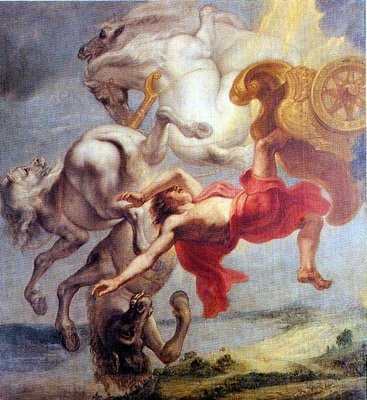
Phaeton, by Jan van Eyck c.1390 - 1441
"Now, this has the form of a myth, but really signifies a declination of the bodies moving around the earth and in the heavens, and a great conflagration of things upon the earth recurring at long intervals of time. When this happens, those who live upon the mountains and in dry and lofty places are more liable to destruction than those who dwell by rivers or on the sea-shore; and from this calamity the Nile, who is our never-failing savior, saves and delivers us.
"When, on the other hand, the gods purge the earth with a deluge of water, among you herdsmen and shepherds on the mountains are the survivors, whereas those of you who live in cities are carried by the rivers into the sea; but in this country (Egypt) neither at that time nor at any other does the water come from above on the fields, rather having always a tendency to come up from below, for which reason the things preserved here are said to be the oldest."
These few words point directly at what so much else hints, that there have been cycles upon cycles of growth and decline, each cycle perhaps developing a different aspect of human consciousness, and each decaying and falling as the limits of human character are tested.
"The fact is," says the priest of Sais, " that wherever the extremity of winter frost or of summer sun does not prevent, the human race is always increasing at times, and at other times diminishing in numbers."
This pattern of expansion and decline is known to the Maya and the Vedas of India. It also can be seen in the cycles of the animal world. Growth is not a linear affair, after a time the rigidity of the past so constricts further expansion that in order to allow space for the new there must be an autumn and a winter.
Where our present-day civilization is in the cycle I leave to the imagination.
And what of Sais? Solon was told "all that has been written down of old ... is preserved in our temples".
No longer, it seems. 2600 years have all-but removed the temples of Sais from the surface of the Earth. The Delta is not as kind to ancient buildings as is the desert of Egypt and there is almost nothing to be seen in Sais today.
Hope remains - little archeological digging has yet been done there and increasingly subtle techniques can discern much that would previously be missed.
Perhaps an ancient storeroom of records will someday be found at Sais. Perhaps this knowledge of our lost human past, kept secret by countless generations of initiates only to be lost, (we assume), at the beginnings of the Christian era will be found again.
For more on Atlantis see the Ascending Passage: Atlantis Page
Ascending Passage is a website exploring Ancient Egypt with awe and wonder yet with respect for science. The proven historic facts of this ancient culture are amazing enough...AscendingPassage.com
Hints of great civilizations in the forgotten past are by no means confined to Egypt. AncientMystery.info looks at unanswered archaeological questions from around the world:AncientMystery.info
In the regions near the Atlantic Ocean the legend of a great flood is so common that a historical basis is very likely. And the civilization that was destroyed by that flood had a name that even today has great power: Atlantis.

Our knowledge of Atlantis is based on many minor bits of evidence - and one document that may rise to the level of history. That is a short section in a work by Plato called Critias. An ancestor of Plato named Solon traveled to Egypt about 600 BC and lived for a time in Sais (Zau), then the capital of Egypt and an ancient center of learning on the Nile Delta. Here he befriended the local priests and discussed many things with them.
The history held by that Egyptian temple reached much farther back in time than that known to the Greeks. "There have been, and there will be again, many destructions of mankind arising out of many causes." an aged priest told Solon.
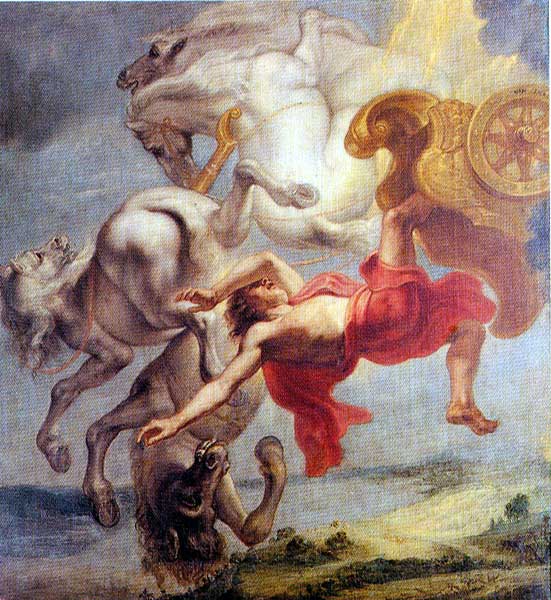
"There is a story which even you (Greeks) have preserved, that once upon a time Phaethon, the son of Helios, having yoked the steeds in his father's chariot, because he was not able to drive them in the path of his father, burnt up all that was upon the earth, and was himself destroyed by a thunderbolt.
"Now, this has the form of a myth, but really signifies a declination of the bodies moving around the earth and in the heavens, and a great conflagration of things upon the earth recurring at long intervals of time. When this happens, those who live upon the mountains and in dry and lofty places are more liable to destruction than those who dwell by rivers or on the sea-shore; and from this calamity the Nile, who is our never-failing savior, saves and delivers us.
"When, on the other hand, the gods purge the earth with a deluge of water, among you herdsmen and shepherds on the mountains are the survivors, whereas those of you who live in cities are carried by the rivers into the sea; but in this country (Egypt) neither at that time nor at any other does the water come from above on the fields, rather having always a tendency to come up from below, for which reason the things preserved here are said to be the oldest."
These few words point directly at what so much else hints, that there have been cycles upon cycles of growth and decline, each cycle perhaps developing a different aspect of human consciousness, and each decaying and falling as the limits of human character are tested.
"The fact is," says the priest of Sais, " that wherever the extremity of winter frost or of summer sun does not prevent, the human race is always increasing at times, and at other times diminishing in numbers."
This pattern of expansion and decline is known to the Maya and the Vedas of India. It also can be seen in the cycles of the animal world. Growth is not a linear affair, after a time the rigidity of the past so constricts further expansion that in order to allow space for the new there must be an autumn and a winter.
Where our present-day civilization is in the cycle I leave to the imagination.
And what of Sais? Solon was told "all that has been written down of old ... is preserved in our temples".
No longer, it seems. 2600 years have all-but removed the temples of Sais from the surface of the Earth. The Delta is not as kind to ancient buildings as is the desert of Egypt and there is almost nothing to be seen in Sais today.
Hope remains - little archeological digging has yet been done there and increasingly subtle techniques can discern much that would previously be missed.
Perhaps an ancient storeroom of records will someday be found at Sais. Perhaps this knowledge of our lost human past, kept secret by countless generations of initiates only to be lost, (we assume), at the beginnings of the Christian era will be found again.
For more on Atlantis see the Ascending Passage:
Ascending Passage is a website exploring Ancient Egypt with awe and wonder yet with respect for science. The proven historic facts of this ancient culture are amazing enough...
Hints of great civilizations in the forgotten past are by no means confined to Egypt. AncientMystery.info looks at unanswered archaeological questions from around the world:
Labels: Ancient Mysteries, Atlantis, Egyptian Mysteries
posted by AccentNepal | 4:11 AM
|
0 comments

